| |
|
|
| |
|
Introduction
|
|
Programme on
Women’s Economic, Social and Cultural Rights (PWESCR) is an
international initiative in the area of gender and economic,
social and cultural rights. PWESCR works to promote women’s
human rights, especially in the context of economic, social and
cultural rights by bringing a gender framework to policy, law
and practice at local, national, regional and international
levels through ever-evolving strategies and activities in both
conceptual and practical realms. PWESCR, in its initial phase
will have a South Asia regional focus. However, as we get
support from other regions, we plan to expand this initiative
globally.
|
|
What is PWESCR?
|
|
PWESCR is an international advocacy and educational initiative in the area of women and their economic, social and cultural
rights (ESCR). From its base in India, PWESCR, works to promote
the human rights of women, addressing women’s poverty, health
standards, and right to food, education, water and work. We do
that by bringing a gender perspective to policy, law and
practice at the local, national, regional and international
levels.
PWESCR is currently particularly focused on South Asia. It is
estimated that women form 70% of the world’s poor and two third
of the world’s illiterates while they own only 1% of the world’s
wealth. Women often work longer hours than men, but substantial
part of their work remains unrecognized under-valued, and
unappreciated. And the possibility of violence permeates their
lives from birth to death. Women’s poverty is our focus and we
seek to explore how international human rights framework can be
used to address these issues.
PWESCR was started in 2005 out of a critical need to develop
international human rights organizations in the Global South
that are able to network, share expertise, strengthen human
resources, and create tools to raise awareness around women’s
ESCR. Our leadership development programme is aimed at
addressing these needs from the local to the global.
One in every two women in South Asia faces violence in their
daily life (Unifem, 2007). There are 50 million fewer women in
South Asia than what a balanced demography demands. PWESCR’s
work gives special attention to implementation and 3monitoring
of women’s rights in South Asia by working with UN Treaty
Bodies.
PWESCR seeks partnerships with other networks and continues to
strengthen its relationships with key organizations working on
an agenda similar to ours in Africa, Latin America, Asia, Europe
and North America.
|
|

|
|
What Does PWESCR
Do?
|
|
PWESCR carries out its work for ESCR on a number of fronts. We
conduct action-oriented research to provide deeper analysis of
women’s economic, social and cultural issues and to facilitate
new strategies for defending human rights.
PWESCR’s programme facilitates collaboration between various
networks and organizations to work at all levels for the
actualization of women’s human rights. We are actively engaged
in pushing for social security as a right for workers in the
unorganized sector. The Social Security Now campaign is aimed at
highlighting the survival needs of the poor, particularly
women and the marginalized. While leading the campaign in two
states of India, PWESCR has also trained others in monitoring
skills.
We engage in advocacy, working to strengthen standards and full
implementation of government’s commitments within the
international human rights framework. In order to monitor
women’s economic, social and cultural rights in India, PWESCR
has initiated a collective action process. The short term goal
for this peoples’ collective is to develop a shadow report to
India’s Government report for the UN Committee on ESCR. India is
scheduled to report in May 2008.
PWESCR also provides technical assistance and imparts human
rights education to individuals and to women’s groups on
monitoring and self-representation skills through leadership
development programs. Towards this objective PWESCR also
organizes its leadership development school each year.
Grassroots women leaders from South Asia benefit from the
trainings by acquiring knowledge and new leadership skills.
These women leaders in turn train others.
PWESCR provides human rights education and training to enable
participation of other social organizations in the monitoring of
human rights bodies such as the Council for ESCR and CEDAW among
others.
|
|
|
|
Goals
|
-
To establish
links and foster collaborations in order to enhance learning, as
well as develop shared strategies to advocate problem- solving
alternatives at all levels in the context of gender.
-
To build
leadership and capacity of groups, organizations, activities and
other actors in the field of human rights and economic justice
to promote women’s ESCR
|
|
|
|
Principles
|
-
All human rights
are universal, indivisible, and interdependent. Civil and
political rights are mutually interdependent on
economic, social and cultural rights.
-
Women’s economic
and social empowerments are fundamental to full realization of
women’s human rights.
Gender analysis is crucial to advance all ESCR.
-
Human rights
mechanisms are on organizing, mobilizing and empowering tool in
addition to an international legal framework.
-
An intersectional
analysis ensures that women from marginalized communities are
not left behind.
|
|
|
|
Be a part of PWESCR
|
|
We take this
opportunity to invite you and your organization to join us in
this endeavour — to develop shared vision and to strengthen
partnerships to advance women’s human rights. Your input based
on your experiences working in this area would be critical as we
start conceptualising on women and ESCR priorities.
-
Do you work on
women’s economic, social and cultural rights? What are the areas
of your focus?
-
What has your
experiences been both in terms of successes and challenges
promoting women’s ESCR?
-
What
priorities would you suggest PWESCR to consider?
-
What advice
can you give us as we develop this new programme?
-
Would you like
to receive information about PWESCR’s future activities?
-
Would you like
to join our list serve?
|
|
|
| |
|
Our Staff
|
|
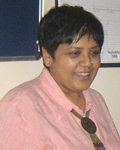
Priti Darooka, Founder and Executive Director
Priti Darooka is the founder and executive director of PWESCR (Programme on Women's Economic, Social and Cultural Rights). Working in partnership with diverse groups and networks, she continues to provide support and is a part of several initiatives on women's poverty, right to livelihoods including right to land, social security and right to food. She strives to make human rights framework and mechanisms relevant to address issues of poverty. With expertise on the International Covenant on Economic, Social and Cultural Rights, she works closely with the UN Committee on Economic, Social and Cultural Rights (CESCR) and various UN rapporteurs. She has assisted women from civil society groups from several countries to participate in CESCR review process. She helped PWESCR develop its Leadership Institute in Women's ESCR, an innovative leadership development programme. She was previously at the Ford Foundation, in New York and assisted the foundation in its grant making in the areas of international human rights; women's rights and gender equity; and international economic policy. She also helped the foundation in the creation of ESCR-Net and in linking works of feminist economists with human rights advocates. Prior to the Ford Foundation, she was at UNIFEM (United Nation's Development Funds for Women) where she worked on violence against women indicators and assessment and coordinated UNIFEM's work in Afghanistan. As a consultant to the Center for Women's Global Leadership, she organised a women's rights hearing at the UN Conference Against Racism in Durban, South Africa. She was the national campaign coordinator with UNITE for their Global Justice for Garment Workers Campaign. Priti has also worked with community-based organisations such as Manavi, and Urban Justice Center (UJC). She was also involved in the Stop FTAA (Free Trade Area of Americas) campaign and focused on different aspects of trade and women's lives, from a feminist and human rights perspective. Priti has authored and presented many papers in various international conferences and forums. She has a master's degree in women's studies from Rutgers University in the US. Priti is a founding member of SAFA (South Asian Feminist Alliance) for ESCR and a member of core group for Global Coalition for Social Protection Floors. She is also the feminist focal person for South Asia for CSO Partnership for Development Effectiveness. She has recently been appointed member of the Global Reference Group for Bread for the World.
|
|
|
|
|

|
Kripa Basnyat, Programme Officer for Leadership Development
Kripa Basnyat helps PWESCR promote women's ESCR and economic justice. She builds leadership and capacity of South Asian groups, organisations, activists and other actors in the field of women's human rights. Hailing from Nepal, Kripa also coordinates PWESCR's Leadership Institute in Women's ESCR, Garima (Women's Leadership Development Programme in Hindi) and Women, Poverty and Human Rights, a two-day learning programme. She holds a master's degree in politics and specialises in international relations. Before joining PWESCR in 2011, she worked as a programme officer in Himalayan Human Rights Monitors (HimRights) in Nepal. Kripa supports children's education in marginalised groups as a joint secretary of Solidarity for Societal Change Nepal (SOSOCN). She is also an alumnus of PWESCR's 1st Leadership Institute, 2011.
|
|
|
|

|
Kriti Tuteja, Communications Officer
Kriti Tuteja takes care of PWESCR's online and offline communication requirements. With a P.G. diploma in development communication from Jamia Milia Islamia and a bachelor's degree in English honors from Delhi University, Kriti has three years of work experience in the development sector. Before coming to PWESCR, she was a senior communications coordinator at Udayan Care, a child rights organisation. Kriti loves paper quilling and writing poetry.
|
|
|
|
|
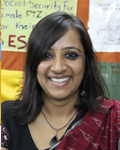
Dyuti, Programme Officer (part-time) for Leadership Development
Dyuti wants to be listed only with her first name!
Dyuti (Ailawadi) assists PWESCR's leadership development team in organising and coordinating the annual Leadership Institute. She is also part of the SAFA secretariat. A feminist/human rights defender/activist at heart, she has completed her Master of Philosophy degree from Delhi School of Economics in Sociology. Dyuti also works with Centre for Social Justice in Assam towards conflict rehabilitation. She has worked as a research assistant on a project with Aastha on tribal women's land rights. More recently she worked with Partners for Law in Development (PLD) on the Sec. 377 Supreme Court Case, where she put together the case summaries. Dyuti enjoys to explore the world through books, music, dance and travel.
|
|
|
|

|
Juno Varghese, Research Associate
Juno Varghese facilitates gender-sensitive policy discussions and looks at national policies through a feminist lens. She works closely with the National Right to Food Campaign and Women's Unpaid Work. She holds a master's degree in gender studies from Ambedkar University. As an assistant programme officer for At GrassRoots (ATG), Juno supported the agenda of economic inclusion and empowerment of marginalised and vulnerable communities. As part of ATG, she also worked with The Leprosy Mission Trust India on women empowerment projects. Juno loves to collect newspapers clippings.
|
|
|
|
|
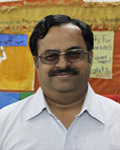
V.K. Srinivasan, Manager Accounts, Finance and Administration
V.K. Srinivasan manages PWESCR's budget, finance and accounts. He also oversees general administration. Holding a master's degree in commerce, he has more than 30 years of work experience, including nearly 20 years in the corporate sector. Finding more meaning in what first began as voluntary work, he eventually made the shift to the NGO sector. He enjoys watching cricket
|
|
|
|

|
Maya Varma, Officer Accounts and Finance
Maya Varma handles financial transactions and other statutory business related to accounts and finance at PWESCR. She holds a bachelor's degree in commerce from Kerala University and has more than 15 years of working experience in acccunts and finance within the NGO sector. She loves to explore places around India and has often travelled with her son as a backpacker through difficult terrains. Maya is a keen follower of activities and issues in the field of human rights in India.
|
|
|
|
|
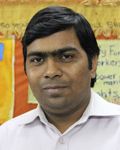
Amit Kumar, Office Assistant
Amit Kumar ensures that administrative tasks are efficiently carried out. He has been part of PWESCR's team since 2013 and maintains correspondence files, stationary and records. He also supervises housekeeping. Previously, Amit has worked with the Rotary International's India National Polio Plus Committee. He holds a bachelor's degree in arts from EIILM University and has also completed certificate courses in computer, library and information science.
|
|
|
|
|
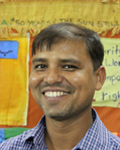
Prakash Chand, Office Assistant & Driver
Prakash Chand works closely with Amit and ensures that the office functions smoothly. Additionally, he is the office driver. Before joining PWESCR in 2010, he worked as an administrator with Hindustan Latex Family Planning Promotion Trust and Human Rights Law Network, a division of Socio Legal Information Center.
|
|
|
|
|
|
|
Home
|
About Us
|
Financials
|
Resources
|
Donation
|
Contact Us
|
Site map
Copyright 2008, All Rights Reserved. PWESCR.
|
|
|
|